

I had my first taste of Bibimbap when I worked for Televideo in San Jose back in 1982. Televideo was a Korean owned company led by the illustrious Mr. Wong who would walk around the company and the employees would, meerkat like, keep an eye out for him. “Here comes Mr. Wong! Look busy!” The company was going downhill and since I was one of the most recent hires, I was one of the first employees to be let go. Because of these layoffs we wanted to make a t shirt that said “I’ve been Wonged” when we found out that Mr. Wong was replacing the doors to his office with big expensive solid oak doors instead of putting the money back into the company.
One of the best things about Televideo was the cafeteria downstairs. They served delicious Korean food and bibimbap was one of the popular dishes. Bibimbap is not bibimbap without gochuchang sauce so do your best to find it. Otherwise, this is just rice with vegetables.
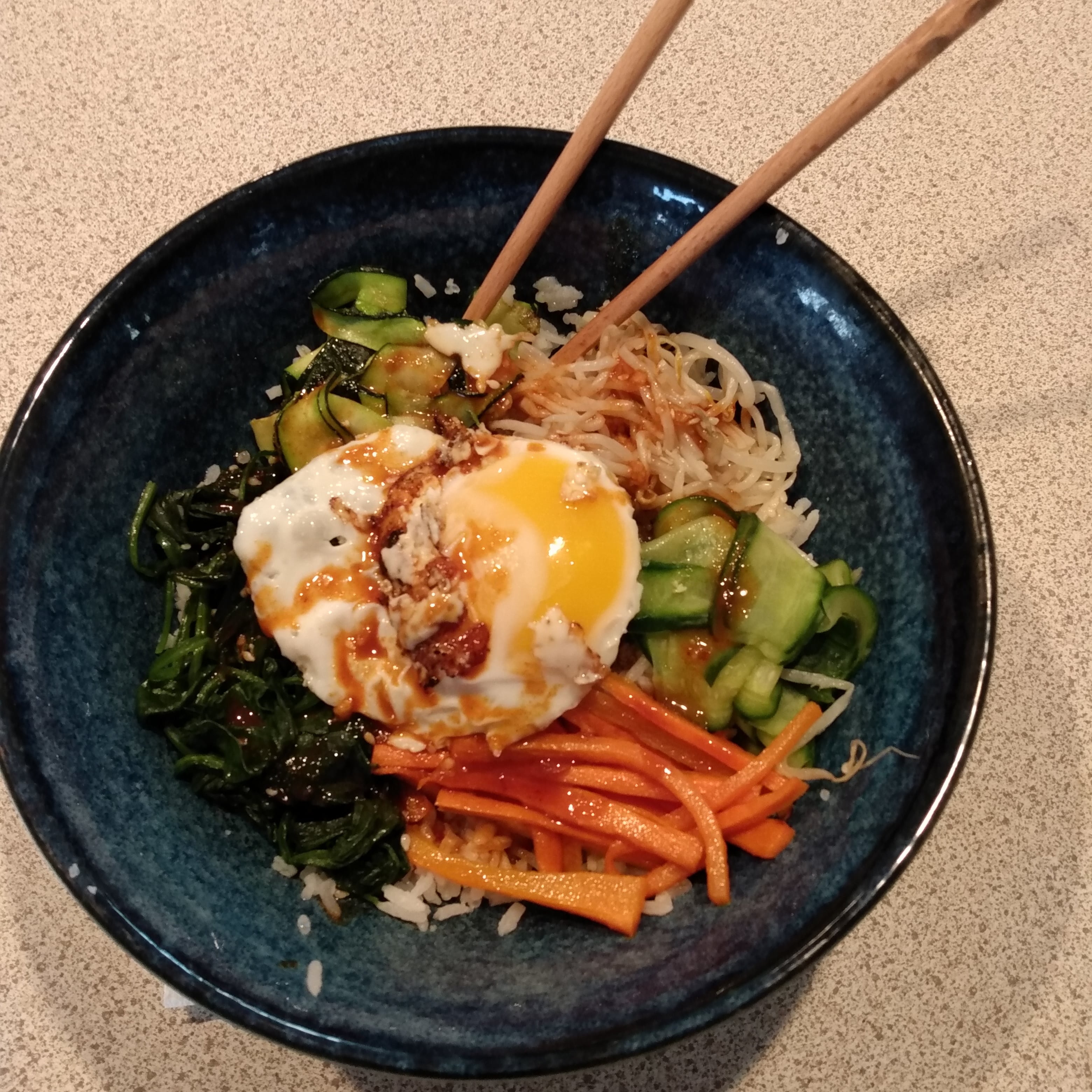
Bibimbap
(Korean Rice with Assorted Vegetables, maybe meat, definitely a fried egg)
Ingredients
Typically, bibimbap is made with beef but it’s perfectly scrumptious with just an egg plopped on top. In case you eat meat, and you want to be authentic I’ve included how to add meat. Otherwise just skip over it and go to the egg or just the veggies.
3-1/2 oz. beef (round steak works well) minced
Beef Marinade
1 Tbsp soy sauce
1 Tbsp sesame oil
1 tsp brown sugar
1/4 tsp garlic put through a garlic press
Vegetables
1 bag of spinach
1 bag of bean sprouts
1 zucchini thinly sliced on a mandoline
3-1/2 oz shiitake mushroom (optional)
1 small carrot julienned
sea salt
3 cups steamed rice
3 eggs
Some cooking oil
Optional: toasted seasoned seaweed shredded (long thin cut)
Bibimbap sauce
2 Tbsp gochujang
1 Tbsp sesame oil
1 Tbsp sugar
1 Tbsp water
1 Tbsp sesame seeds toasted or untoasted
1 tsp apple cider vinegar
1 tsp garlic put through a garlic press
Instructions
If you’re using meat: mix the minced beef with the marinade and let it set for about 20 minutes while you are working on other ingredients. After about 20 minutes add some cooking oil to a fry pan and cook the meat on medium high until it’s cooked through. Set aside.
Mix the bibimbap sauce ingredients in a bowl. Set aside.
Bring a pot of water to a boil and wilt the spinach in it. With a slotted spoon take the spinach out and put it in a colander to drain most of the water out. (Don’t throw the water out.) Once the spinach is cool add ¼ teaspoon of sesame oil, a pinch of salt and some sesame seeds. Set aside.
Blanche the bean sprouts in that same water and spoon them out while they’re still crisp. Add ¼ teaspoon of sesame oil, a pinch of salt and some sesame seeds. Set aside.
Saute the zucchini in a little oil until just barely cooked. Set aside.
Rinse, peel and julienne the carrots. Add some cooking oil to a fry pan and saute the carrots on medium for 2 to 3 mins. Set aside.
If you’re using shiitake mushrooms clean/rinse them and thinly slice. Add some cooking oil and a pinch of sea salt to a fry pan and cook the mushrooms on medium high until they are just barely cooked.
Make fried eggs. Sunny side up or easy over is fine whatever you prefer.
Put the cooked rice into a bowl and (if using) add the pile of meat in the middle. Put some vegetables, and seasoned seaweed (if using) around the sides of the bowl. Plop the egg on top of the rice (or on top of the meat) in the center. Drizzle the gochuchang sauce over the whole business to your liking (it’s spicy so go easy if you don’t already know that you love it like I do.)
You can mush everything together or eat separately. With chopsticks is best I think.
Other vegetable options – raw julienned Daikon radish and/or thinly sliced English cucumber. If you add cucumber slice it on a mandoline, sprinkle with sea salt and let it macerate for 20 minutes. Then rinse and use.
 R L Benoit - Writer/Artist